Choosing a China-based Vaping System supplier takes more than comparing prices or inspecting polished product photos. Global buyers need consistent specifications, documented quality checks, dependable communication, and clear answers about manufacturing capacity. A device may look identical across samples, yet small changes in materials, assembly, or testing can affect reliability. Details matter.
Public-health researcher Dr. Konstantinos Farsalinos has studied electronic nicotine delivery products. A careful paraphrase of a principle reflected in his research is: “Assess products through evidence, not marketing claims.” This is not a verbatim quotation. For buyers, the same caution supports practical checks: request sample units, review test documentation, confirm component traceability, and ask how production batches are monitored. Strong claims deserve strong evidence.
This guide examines what international buyers should evaluate when comparing suppliers, from product development and quality control to communication and shipment planning. Requirements vary by destination, so buyers should confirm applicable rules with qualified local advisers before placing orders. No supplier can replace that review. It is also worth asking difficult questions about after-sales support and reported defects; these conversations can feel awkward, but avoiding them may cost more later. A capable partner should answer plainly, provide records, and acknowledge limits. Not every factory will be the right fit. Careful verification helps buyers make a more informed choice.
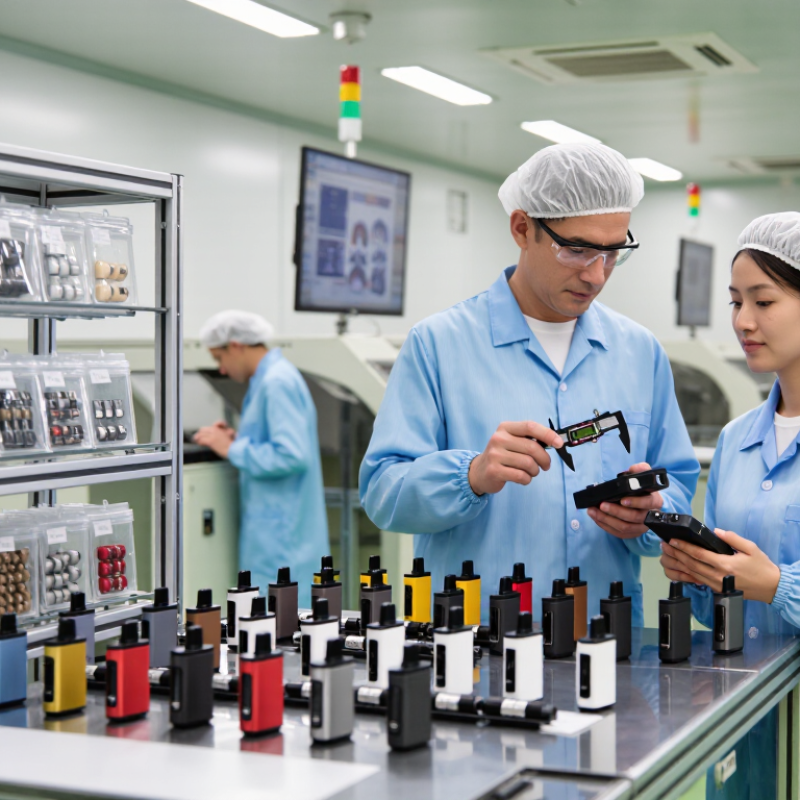
A vaping system supplier provides more than a finished device. For a buyer, the work often begins with a clear specification: device format, compatible components, battery capacity, charging interface, and packaging needs. Details matter. A connector that feels loose during sample review can become a costly issue across a large order.
Reliable suppliers coordinate component sourcing, assembly, and documented quality checks. Buyers may request batch records, inspection criteria, and test documentation relevant to the intended market. A useful supplier explains what each document covers instead of sending a folder without context. They can also share sample timelines, production capacity, lead times, and shipping requirements. Small delays happen. Clear updates help teams adjust plans without guessing.
Support should continue after shipment. This can include troubleshooting procedures, replacement-part planning, and feedback tracking when a recurring defect appears. Good communication is practical: photos of a packaging issue, a dated inspection report, or a written answer about component compatibility. Still, no supplier can make every decision for the buyer. Requirements differ by market and may change, so buyers should verify current obligations independently. A neat specification sheet is helpful, but it can miss real-use details. That is worth checking.
A vaping system begins as a set of engineering decisions: airflow, heating control, electrical protection, and materials that contact the liquid. Designers map these parts before building prototypes. A narrow air channel can change the draw; an uneven seal may cause leakage. Small details matter. Engineers test temperature stability, battery performance, and aerosol output under repeatable conditions, then revise parts that fail.
The National Academies of Sciences, Engineering, and Medicine reviewed more than 800 studies for its 2018 report, Public Health Consequences of E-Cigarettes. It found substantial evidence that use can increase indoor airborne nicotine and particulate matter. That finding makes controlled emissions testing important during development, not merely a final inspection. ISO 20768:2018 also describes a routine analytical machine method for measuring emissions, helping laboratories compare results under defined conditions.
Manufacturing translates the design into controlled steps: incoming-material checks, precise assembly, electrical tests, leak checks, and batch records. A technician might inspect a gasket under bright light, then run a device through repeated airflow cycles. Data should link each test to its component lot and production settings. I would not treat a single successful sample as proof of consistency. Real production varies, and a process that looks stable on paper can still drift.
| Design and Manufacturing Stage | Typical Activities | Key Checks and Considerations | Typical Output |
|---|---|---|---|
| 1. Requirements and market review | Define intended markets, product format, user requirements, operating conditions, and applicable product restrictions. | Requirements vary by destination. Review relevant rules for product composition, labeling, packaging, age restrictions, and market access before design is finalized. | Product requirements and compliance plan |
| 2. System architecture | Select the device format and define the relationship between the power source, control electronics, heater, airflow path, and liquid reservoir or cartridge. | Check component compatibility, assembly sequence, service life targets, and protection against foreseeable misuse. | System block diagram and preliminary specifications |
| 3. Mechanical and electrical design | Develop enclosure and component layouts; design the battery connection, charging interface, sensors, and control circuitry where applicable. | Assess electrical insulation, short-circuit risks, thermal behavior, charging design, material compatibility, and dimensional tolerances. | Drawings, circuit design, and design risk assessment |
| 4. Prototype development | Build prototype units and evaluate fit, airflow, heating behavior, leakage resistance, charging, and basic device operation. | Testing should follow documented methods and defined acceptance criteria. Prototype results do not by themselves establish regulatory compliance. | Prototype samples and test findings |
| 5. Design verification and validation | Verify that design outputs meet specifications and validate that the finished system meets its defined intended-use requirements. | Depending on the product and market, evaluation may include electrical, mechanical, thermal, leakage, materials, and emissions-related testing by suitable methods or laboratories. | Verification records and validation report |
| 6. Supplier and incoming-material control | Qualify component sources and inspect incoming batteries, electronic parts, structural materials, heating components, and packaging. | Maintain specifications, lot identification, supplier records, and risk-based inspection criteria. Battery transport requirements may include applicable UN 38.3 testing documentation. | Approved supplier records and incoming inspection results |
| 7. Production process setup | Define work instructions, assembly sequence, tooling, inspection points, and controls for handling components and product-contact materials. | Use controlled procedures and calibrated equipment where needed. Process controls should be appropriate to product risks and documented requirements. | Production instructions and process control plan |
| 8. Assembly and in-process inspection | Assemble the housing, electrical components, heater, airflow elements, and liquid-containing parts according to the approved design. | Check component orientation, connections, dimensions, sealing features, and workmanship at defined production stages. | Assembled units and in-process inspection records |
| 9. Final inspection and functional testing | Inspect finished units and perform applicable checks, such as activation, charging, electrical function, indicator operation, and leakage screening. | Define pass/fail criteria before production and retain inspection results with appropriate product or lot identification. | Release decision and final test records |
| 10. Packaging, traceability, and shipment | Pack products with the required market-specific information and maintain records linking finished goods to relevant production lots. | Confirm labeling and shipping arrangements for the destination market. Lithium-battery shipments must follow applicable transport rules. | Packaged goods, traceability records, and shipping documents |
China’s role in the global vaping supply chain is most visible in manufacturing clusters, where device assembly, battery sourcing, packaging, and component suppliers sit close together. That proximity can shorten production cycles and make design changes easier. It matters. But scale alone does not prove quality.
Grand View Research’s 2024 market analysis valued the global e-cigarette market at
US$28.17 billion in 2023
It projected a 30.6% compound annual growth rate through 2030.
This is a market estimate, not a measure of China’s output. Buyers should read it carefully.
For international procurement teams, practical checks include factory audit records, batch traceability, battery test documentation, and clear quality-control procedures. These details are less visible than a polished sample. Yet they matter when orders move across several suppliers and shipping stages.
A supplier’s location cannot replace independent verification. Nor can a quick factory visit reveal every weakness.
China’s dense supplier network offers real manufacturing advantages, but buyers still need to test samples and review records before scaling orders.
Global buyers evaluate a vaping system supplier by checking evidence, not just a polished catalog. Ask for current product specifications, quality-control procedures, and traceable batch records. Can the supplier explain how components are inspected before shipment? Clear answers matter. So do dated test reports that identify the tested model and laboratory. Verify documents independently where possible, rather than relying on screenshots or sales summaries.
Assess whether the supplier can support the destination market’s applicable requirements. Request relevant conformity documents and confirm their scope with qualified local advisers. Packaging, labeling, and technical files should match the exact product configuration. Small mismatches can delay a shipment. A sample order can also reveal practical issues: inconsistent finishes, loose connectors, unclear instructions, or packaging that fails during handling. Record these observations against agreed specifications.
Communication and production controls deserve equal attention. Ask how changes to materials or components are approved, and how defects are reported and corrected. Compare lead times, minimum order quantities, payment terms, and after-sales response in writing. A low quotation may exclude inspection, packaging changes, or replacement costs. That is easy to overlook. No checklist removes every risk, and a supplier’s first answers may sound more certain than the evidence supports. Revisit assumptions before committing to larger orders.
When sourcing vaping systems from China, international buyers need documented compliance, not broad supplier assurances. WHO’s 2023 Global Tobacco Epidemic report noted that 121 countries had adopted some form of e-cigarette regulation. Requirements vary by destination. Ask for component specifications, batch traceability, and current test reports before approving samples. Paperwork matters.
Battery safety deserves separate review. IEC 62133-2 addresses portable sealed lithium-cell safety. The UN Manual of Tests and Criteria, section 38.3, covers lithium-battery transport testing. Request reports matching the exact cell, battery pack, and finished model; a similar-looking sample proves little. Keep records. Supplier audits should also check incoming inspection, defect handling, and change control, including component substitutions.
Compare a factory certificate’s scope with the actual production site and product category. Certificates alone do not confirm every unit. Ask how failed batches are isolated and whether independent laboratories can repeat key tests. WHO’s figures underline a practical point: compliance is local, and documents need updating as rules change. No checklist catches everything.
Define the device format, compatible components, battery capacity, charging interface, and packaging needs. Details matter.
Request batch records, inspection criteria, and test reports tied to the exact model. Ask what each document covers.
Review a sample for finish, connector fit, instructions, and packaging durability. Record findings against the agreed specifications.
Check the report date, tested model, and laboratory details. Verify documents independently where possible; screenshots may not tell the whole story.
Compare lead times, minimum order quantities, payment terms, inspection costs, packaging changes, and replacement support in writing. Look closely.
Ask how material or component changes are approved, and how defects are reported and corrected. A written trail helps.
Look for troubleshooting steps, replacement-part planning, and tracking for recurring defects. Photos and dated reports make issues easier to discuss.
Not entirely. Request relevant documents, confirm their scope with qualified local advisers, and verify current requirements independently. A tidy specification sheet may miss real-use details.
A Vaping System supplier provides more than finished devices: services may include product design, component sourcing, assembly, packaging, and technical support. Manufacturing typically involves defining product specifications, selecting compatible materials and components, building prototypes, and conducting checks for performance, consistency, and durability. Clear communication between buyers and suppliers helps align capacity, timelines, and product requirements.
China plays a significant role in the global supply chain through its manufacturing networks and access to component suppliers. Global buyers can assess potential partners by reviewing production capabilities, quality-control procedures, communication practices, lead times, and documentation. Regulatory and quality considerations should be addressed early, since requirements vary by destination market and product category. Buyers should verify that a supplier can provide appropriate testing records, traceability, and product information, and should independently confirm that sourcing and sales comply with applicable rules.