Direct factory supply featuring fully tested, high-capacity electronic nicotine delivery systems (ENDS) for wholesale buyers and distributors.




An authoritative technical analysis for enterprise buyers, brand owners, and compliance officers evaluating global vapor product suppliers.
The global electronic nicotine delivery systems (ENDS) landscape has undergone a paradigm shift driven by stringent regulatory frameworks, evolving consumer preferences, and micro-engineering breakthroughs. Sourcing vapor products across the European Union, United Kingdom, and international markets requires navigating complex compliance mandates—specifically the European Union Tobacco Products Directive (TPD Directive 2014/40/EU Article 20), United Kingdom Tobacco and Related Products Regulations (TRPR), and European Conformity (CE Certification) parameters.
For B2B importers, global distributors, and retail brands, securing trustworthy CE Certification TPD Tobacco Suppliers & Companies is no longer merely a procurement logistical detail; it is a fundamental pillar of risk management, legal market access, and brand equity safeguard. Compliance verification demands thorough scrutiny of chemical emission analytical profiles, battery electromagnetic safety (EMC/LVD), child-resistant mechanism integrity, and precise EU-CEG notification workflows.
Achieving regulatory compliance for electronic cigarettes exported to European territories involves a multi-tiered validation process. Distributors must distinguish between electrical hardware safety (CE Marking) and chemical formulation approval (TPD/TRPR Notification).
Under TPD regulations, any nicotine-containing e-liquid or hardware mechanism intended for vaporizing nicotine-containing fluid must satisfy rigorous statutory thresholds prior to retail distribution:
Because disposable and rechargeable vape devices contain integrated Lithium-Ion power cells, logic chipsets, and thermal heating elements, they are legally classified as electrical and electronic equipment. CE Certification requires verification across three key EU Directives:
| CE Directive Standard | Technical Scope & Assessment Criteria | Mandatory Test Protocols |
|---|---|---|
| Electromagnetic Compatibility (EMC Directive 2014/30/EU) | Ensures internal chipsets do not emit excessive electromagnetic interference and remain immune to external RF radiation. | EN 55032 / EN 55035 Emission & Immunity testing. |
| Low Voltage Directive (LVD 2014/35/EU) | Evaluates electrical safety, over-charge protection, circuit insulation, thermal runaway limits, and short-circuit protection during charging cycles. | EN 62368-1 Audio/Video, Information & Communication Technology Equipment Safety. |
| Restriction of Hazardous Substances (RoHS Directive 2011/65/EU & 2015/863) | Verifies that device soldering, PCB components, metal housings, and plastic enclosures do not contain hazardous heavy metals or phthalates above ppm limits. | XRF Spectrometry & Wet Chemical Analysis for 10 restricted substances (Pb, Hg, Cd, Cr VI, PBB, PBDE, DEHP, BBP, DBP, DIBP). |
| Battery Transport Safety (UN38.3 & IEC 62133) | Mandatory lithium battery mechanical shock, thermal vibration, altitude simulation, external short-circuit, and forced discharge safety certification. | UN38.3 Air Transport Regulations & IEC 62133 secondary cell safety standard. |
Exploring structural compliance engineering, high-puff legal workarounds, and localized consumer preferences across regional markets.
To comply with the strict 2 mL pod capacity while satisfying consumer demand for extended device life, leading engineering factories have pioneered legal multi-tank, dual-chamber, and auto-refill pod systems. Devices utilize 2 mL pre-filled chamber pods linked to compliant external reservoirs, ensuring TPD adherence without compromising runtime.
Modern disposable and pod hardware incorporates micro-LCD and HD curved screens displaying real-time e-liquid volume tracking, battery percentage, variable wattage settings, and puff duration analytics. Smart MCU chips balance coil wattage to preserve flavor and prevent dry hits.
Regulatory pressure across the EU (including Germany, France, Spain) and the UK requires enhanced child-proof mechanisms. Manufacturers are integrating electronic combination locks, bi-metric fingerprint sensors, 3-click sequential button locks, and automatic draw-timeout safety shutoffs.
Transitioning from traditional single wire coils to dual mesh matrix heating wires (0.4Ω - 0.8Ω) crafted from surgical-grade alloys. Dual-mesh architecture alternates firing between coils to optimize flavor integrity, maximize atomization efficiency, and prevent premature coil degradation.
From raw material testing to automated cleanroom assembly—how leading OEM/ODM suppliers maintain zero-defect standards.
Building a high-performing e-cigarette device that maintains structural seal integrity, precise air-flow resistance, and battery safety requires strict quality engineering at every manufacturing step. Reputable CE Certification TPD Tobacco Suppliers operate under ISO 9001 and ISO 13485 (Medical Device) manufacturing standards.
Leakage is the primary cause of RMA claims in electronic vaporizers. State-of-the-art factories employ high-precision CNC injection molding to produce PCTG food-grade oil storage tanks. Medical-grade silicone gaskets and multi-layer labyrinth oil-trap channels are incorporated to absorb condensate fluid and block capillary leakage during air transit and temperature fluctuations.
All e-liquid mixing occurs in Class 100,000 dust-free cleanroom environments. Raw materials—Pharmaceutical Grade Vegetable Glycerin (VG), Propylene Glycol (PG), pure nicotine salts, and natural/artificial flavoring agents—are tested via Gas Chromatography to verify purity levels above 99.5%. Automated multi-nozzle pneumatic liquid injectors ensure fill tolerance consistency within ±0.05 mL.
Lithium-Ion cobalt pure cells (650mAh - 1000mAh) undergo 100% capacity grading and internal resistance sorting prior to assembly. Integrated power management Microcontroller Units (MCUs) are programmed with seven layer defense protection:
Before batch dispatch, finished products undergo strict batch QA testing inside climate simulation chambers:
Navigating cross-border trade requires comprehensive end-to-end supply chain logistics and legal consultation. Modern vape manufacturing operations act as full-scope strategic partners, offering white-label customization alongside complete compliance documentation.
Complete preparation of XML data files, emission lab reports, toxicology profiles, and submission filing directly to national competent authorities across EU member states (e.g., BfR in Germany, ANSES in France, MHRA in the UK).
Comprehensive customization covering custom shell design, surface treatments (rubberized paint, electroplating, leather wraps), custom flavor development, tactile button feel, led screen UI graphics, and packaging design.
To minimize shipping lead times and eliminate import friction, leading manufacturing networks maintain local EU logistics hubs (Germany, Poland, Netherlands warehouses) offering 24-48 hour stock dispatch for wholesale replenishment.
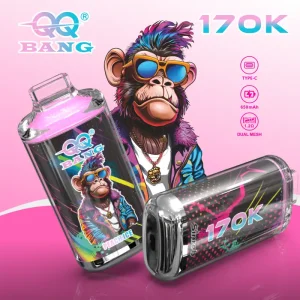
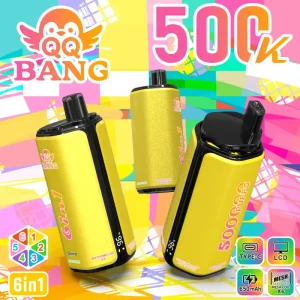
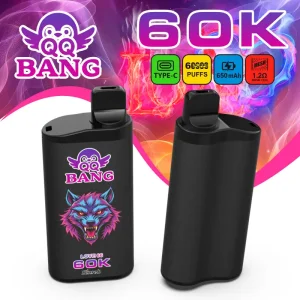
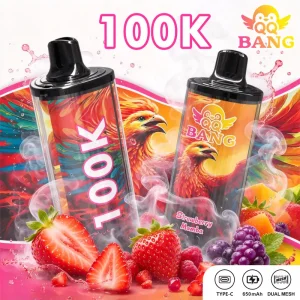
Explore our full line-up of CE-marked electronic vaporizers, multi-flavor pod systems, and high-capacity devices available for global dispatch.




In-depth answers covering TPD compliance, CE testing procedures, e-liquid emission standards, heavy metals testing, and EU warehouse fulfillment.
While both are mandatory for commercial sale in the European market, they evaluate fundamentally different aspects of the product:
CE Certification evaluates the hardware and electrical safety of the device under EU Directives including EMC (2014/30/EU), LVD (2014/35/EU), and RoHS (2011/65/EU). It certifies that internal microchip circuitry, lithium-ion batteries, and charger connections meet electrical safety standards, do not emit excessive electromagnetic interference, and are free of toxic heavy metals in electronic components.
TPD Compliance (Article 20 of Directive 2014/40/EU) governs the chemical formulation, e-liquid capacity, aerosol emission toxicology, and health packaging mandates. It restricts pre-filled pods to a maximum 2.0 mL capacity, limits nicotine strength to 20 mg/mL, mandates 6-month pre-market notification via the EU-CEG portal with an assigned ECID, and enforces tactile warning labels and child-resistant packaging.
Traditional high-capacity single-tank disposables (e.g., 10 mL to 20 mL single-chamber non-refillable tanks) are illegal to sell to end-consumers within the EU and UK if they contain nicotine, as TPD restricts pre-filled nicotine tanks to 2.0 mL.
To legally offer high puff counts (e.g., 10,000 to 30,000+ puffs), engineering manufacturers utilize compliant multi-pod or modular auto-refill architectures. These designs utilize individual certified 2.0 mL atomizer chambers linked to separate legally compliant refill containers or multi-pod switching systems where each independent pod strictly satisfies the 2.0 mL legal threshold while allowing users to switch between chambers seamlessly.
Testing must be conducted by ISO 17025 accredited analytical laboratories using standardized machine vaping regimes (ISO 20768). Key required testing reports include:
Because vapor devices utilize rechargeable or high-drain lithium-ion battery cells, importers must verify that suppliers possess valid test reports for:
Sourcing directly from factory suppliers with established European bonded warehouses (e.g., Germany or Poland local stock) offers significant operational benefits for wholesale distributors:
Leading OEM/ODM factories offer full turn-key manufacturing customized to brand specifications: