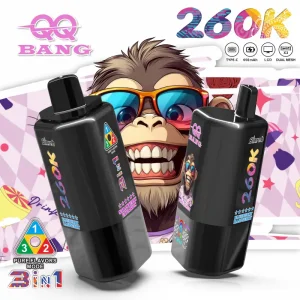
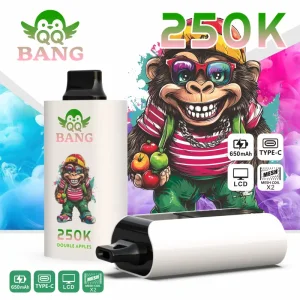
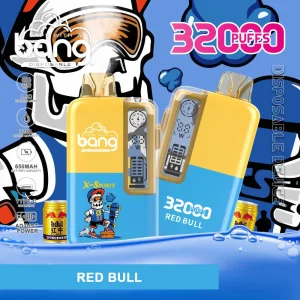
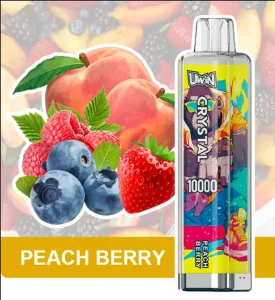
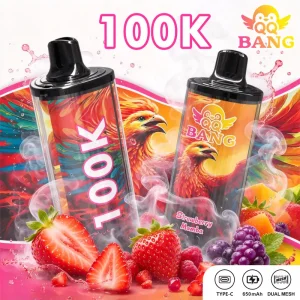
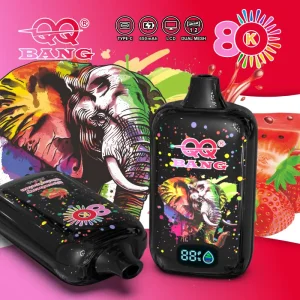
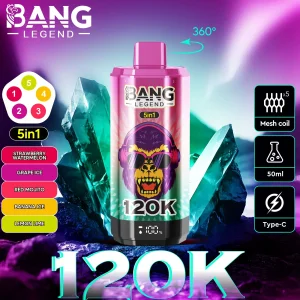
Examine market-ready disposable systems engineered specifically for high-density nicotine salt formulations and multi-chamber delivery mechanisms.

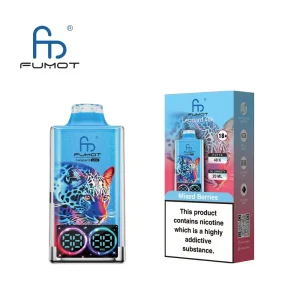
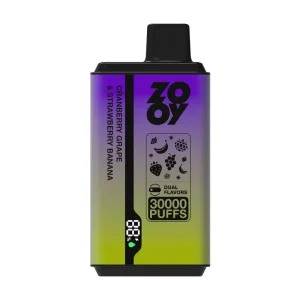
The transition from traditional freebase nicotine formulations to engineered nicotine salts (Nic Salts) represents the single most significant chemical milestone in modern electronic nicotine delivery systems (ENDS). For B2B buyers, global distributors, and private-label brand owners, selecting an ODM (Original Design Manufacturer) supplier involves understanding the underlying chemical thermodynamics and aerosol dynamics.
Freebase nicotine exhibits a alkaline pH level (~8.0 to 8.5), inducing harsh throat hits at concentrations exceeding 18mg/ml. Professional ODM factories utilize monocarboxylic acid neutralization to form protonated salt complexes. By driving the pH down to an optimal physiological range (5.5 – 6.5), aerosol harshness is mitigated, permitting smooth inhalation at 20mg/ml to 50mg/ml strength profiles.
Synthetic and natural salt formations (such as Nicotine Benzoate, Salicylate, and Lactate) reduce the vaporizing temperature threshold. Lower vaporization energy preserves aromatic compounds and mirrors the rapid blood-plasma spike of combustible tobacco within 5 to 7 seconds, drastically enhancing user satisfaction and repeat consumer purchasing cycles.
Industrial-grade ODM factories implement precision nitrogen-blanketing during e-liquid synthesis. This prevents oxidation reactions that cause liquid discoloration, off-notes, and chemical degradation inside transparent clearomizers or high-capacity 90ml to 350ml reservoirs.
| Acid Radical Type | pH Level Range | Throat Hit Profile | Vaporization Temp (°C) | Target Device & Market Suitability |
|---|---|---|---|---|
| Benzoic Acid (Nicotine Benzoate) | 6.0 – 6.5 | Ultra-Smooth / Minimal | 145°C – 155°C | High-strength pod systems (20mg-50mg), US & Global Open Markets |
| Salicylic Acid (Nicotine Salicylate) | 4.8 – 5.4 | Mellow / Soft Warmth | 130°C – 140°C | Flavor-focused fruity/ice profiles, European TPD-compliant sub-ohm pods |
| Lactic Acid (Nicotine Lactate) | 5.2 – 5.8 | Smooth / Creamy Finish | 140°C – 150°C | Dessert, coffee, and rich tobacco flavor profiles; sensitive vaporizers |
| Levulinic Acid (Nicotine Levulinate) | 5.8 – 6.2 | Extremely Mild / Neutral | 135°C – 145°C | Premium high-end ODM formulations, ultra-low irritation benchmarks |
The international nicotine salt marketplace is undergoing massive structural consolidation. Dongguan and Shenzhen remain the global epicenter for precision structural manufacturing, hardware assembly, and automated e-liquid filling operations.
Leading Chinese manufacturing hubs like Dongguan Hongruida Technology Co., Ltd. integrate precision molding, CNC machining, automated SMT PCB assembly, and chemical batch mixing into unified industrial parks. This verticalization eliminates component mismatch, reduces procurement friction, and protects against international logistics disruptions.
While OEM (Original Equipment Manufacturing) relies on client-provided blueprints, ODM (Original Design Manufacturing) delivers turnkey intellectual property. This includes proprietary heating wire resistances (e.g., dual-mesh 0.6Ω to 1.0Ω coils), customized airflow fluid dynamics, specialized casing ergonomics, and micro-encapsulated flavor chemistry.
Synthesizing high-purity Nic Salts is only half the engineering equation; matching fluid viscosity to heating atomizers is paramount to prevent dry hits, spit-back, and thermal breakdown of the liquid matrix.
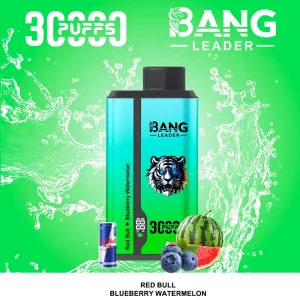
Modern disposable platforms (e.g., 30K to 350K puff architectures) feature integrated micro-controllers and digital tube/LCD interfaces. Real-time telemetry monitors exact e-liquid volume remaining, battery percentage, active voltage output, and child safety lock statuses.
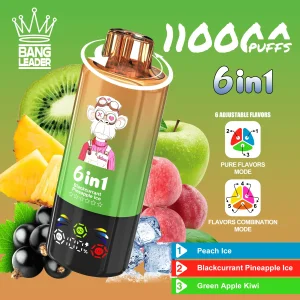
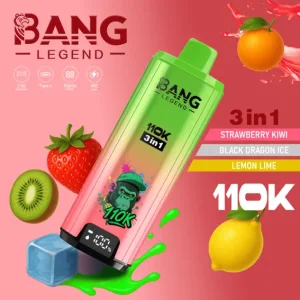
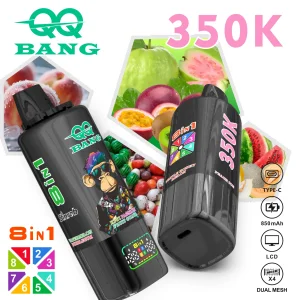
Advanced ODM factories construct 2-in-1, 3-in-1, 6-in-1, and 8-in-1 independent liquid chambers within a single chassis. Dual or triple ceramic/mesh cores allow users to toggle between distinct salt formulations without flavor cross-contamination.
Engineering low-resistance mesh structures (0.6Ω - 0.8Ω) operating at regulated wattage (15W - 25W) allows high-volume vapor production even with reduced nicotine concentration (10mg - 20mg), satisfying users seeking dense cloud density alongside rapid nicotine satisfaction.
Navigating the complex global regulatory landscape requires a manufacturing partner with deep compliance engineering capabilities and robust international testing protocols.
Compliance with Tobacco Products Directive (TPD Article 20) mandates max 2ml pod capacity for standard pre-filled devices, maximum 20mg/ml nicotine limit, emissions testing for carbonyls (formaldehyde, acetaldehyde, acrolein), and mandatory 6-month EC-ID portal notification prior to retail commercialization.
Premarket Tobacco Product Applications demand rigorous characterization of e-liquid toxicological profiles, stability testing across accelerated heat/humidity environments, HPHC (Harmful and Potentially Harmful Constituents) reporting, and battery safety certification (UL8139).
Regional compliance in UAE and Saudi Arabia requires ESMA certification, specific health warning labels in Arabic, tamper-evident childproof seals, and rigorous heavy-metal screening (Lead, Cadmium, Arsenic) via ICP-MS analysis.
| Stage | Test Methodology | Technical Objective / Acceptance Criteria |
|---|---|---|
| Raw Material IQC | HPLC & GC-MS Spectrometry | Verify >99.5% nicotine purity; screen out diacetyl, acetyl propionyl, and heavy metal traces. |
| Cell & Power Testing | Automated Battery Cycling & Drop Test | Ensure UN38.3 & MSDS compliance; zero thermal runaway; 300+ cycle capacity retention. |
| In-Line Vacuum Filling | Negative Pressure Differential (-50kPa) | Guarantee zero air-bubble entrapment and absolute leak-proof sealing under altitude changes. |
| Finished Goods FQC | Simulated Puff Machine & Drop Test | Validate puff count consistency, sensory integrity, resistance accuracy (±0.05Ω), and screen telemetry. |
Global consumer preferences vary drastically based on regional habits, climate conditions, and local economic factors. ODM suppliers must offer flexible modular hardware platform adjustments.
Preference leans heavily toward ultra-sweet, hyper-chilled fruity profiles (Sweet Ice, Menthol blends) with smooth 20mg Nic Salts. Hardware trends favor sleek crystal designs, precise airflow control, and digital juice indicator screens in compliance with regional transport safety rules.
High demand for massive e-liquid reservoirs (36ml to 90ml+) supporting 30,000 to 350,000 puffs. Consumers prefer higher nicotine strengths (30mg - 50mg), dual-mesh power modes (Boost / Turbo modes pushing 20W+), and dynamic video screens or RGB lights.
Demands robust thermal insulation and leak prevention designed for high ambient temperatures (40°C+). Rich tobacco, shisha-inspired double-apple, and mint profiles dominate, paired with high-capacity rechargeable Type-C lithium batteries.
The next decade of ENDS technology will merge sustainable materials science with advanced micro-electronics and bio-synthetic nicotine delivery.
Transitioning from tobacco-derived extraction to non-tobacco synthetic S-isomer nicotine salts eliminates residual tobacco impurities, ensuring complete chemical neutrality and assisting brands in bypassing traditional agricultural regulatory hurdles.
Engineering recyclable PCR (Post-Consumer Recycled) plastics, detachable quick-release lithium batteries, and biodegradable silicone seals enables compliance with upcoming European circular economy mandates and WEEE battery disposal regulations.
Future ODM research is exploring high-frequency ultrasonic transducers (3MHz+) to atomize nic salt e-liquids without thermal heating elements, completely eradicating chemical oxidation and thermal degradation byproducts.
Detailed technical answers to common queries raised by international wholesale buyers, brand managers, and compliance officers.
Answer: OEM (Original Equipment Manufacturing) involves producing hardware or filling e-liquids strictly according to the client's existing design specifications and formulas. ODM (Original Design Manufacturer) provides full-suite R&D, including proprietary structural hardware design, circuit board programming (screens/modes), custom acid-to-nicotine chemical formulation synthesis, compliance testing, and retail packaging creation. ODM allows brand owners to launch fully customized products without possessing internal manufacturing infrastructure.
Answer: Factories utilize multi-stage quality controls: 1) Nitrogen-flushed batch mixing tanks to purge dissolved oxygen; 2) Pharmaceutical-grade amber storage vessels shielding against UV-radiation; 3) Addition of precise antioxidant complexes that prevent acid-base yellowing; and 4) Accelerated stability testing chambers (storing samples at 45°C and 75% relative humidity for 60 days) to simulate 2 years of shelf-life without chemical degradation.
Answer: Mesh coils provide a significantly larger surface-area-to-mass ratio compared to round wire coils. This allows uniform heat distribution across the cotton wick, preventing localized "hot spots" that burn organic nicotine salts. Mesh enables rapid ramp-up time at lower operating wattages, optimizing flavor delivery, extending battery lifecycle, and mitigating dry hits throughout 10,000 to 350,000 puff lifespans.
Answer: Legitimate suppliers must hold ISO 9001 (Quality Management) and ISO 14001 (Environmental Management) certifications, along with cleanroom production standards matching ISO Class 7 or Class 8 (GMP certification). For electronic hardware, products must feature CE, RoHS, FCC, and UN38.3 (battery transport security) certificates. For chemical safety, full MSDS (Material Safety Data Sheet) and TPD emission test reports are mandatory.
Answer: Yes. Automated digital dosing systems allow ODM factories to adjust nicotine salt ratios with precision (e.g., 0mg, 10mg, 20mg for TPD European markets; 30mg, 50mg for international non-TPD jurisdictions). Acid pairings can also be customized to alter throat hit intensity according to market preference.
Answer: ODM engineering employs triple-sealed silicone gaskets, independent oil-storage chambers (oil-coil separation architecture), and pressure-balanced air channels. During production, filled devices undergo negative pressure altitude simulation testing (-50 kPa) to ensure zero seal failures when transported in unpressurized cargo holds.
Answer: For standard stock models with custom logo branding, MOQs typically range from 1,000 to 5,000 units per flavor SKU, with lead times of 10 to 14 days. For full ODM projects requiring custom structural molds, PCB micro-code programming, and bespoke flavor chemistry, MOQs usually start at 10,000+ units, with development timelines spanning 30 to 45 days from prototype sign-off.
Answer: Premium ODM suppliers provide full compliance dossiers including GC-MS quantitative breakdown analyses, aerosol emissions laboratory test reports, toxicological risk assessments (TRA), packaging artwork templates with compliant safety icons, and direct assistance with European TPD/MHRA portal submissions.
Explore additional high-capacity vape platforms available for wholesale ordering, bulk customization, and direct factory-direct dispatch.