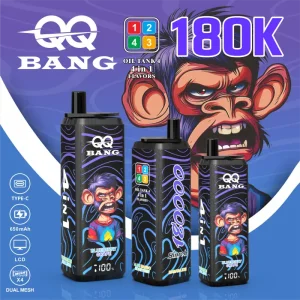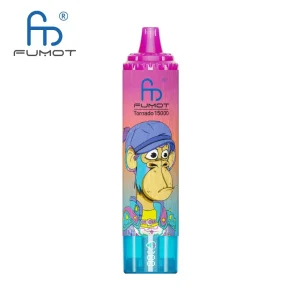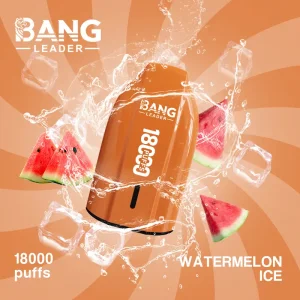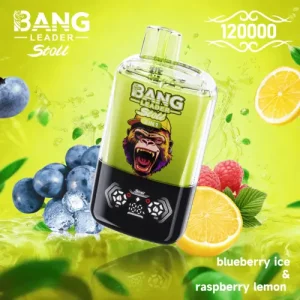
Evaluating commercial capabilities, engineering compliance, and supply chain integrity across the global nicotine delivery ecosystem.
In the rapidly maturing global vaping industry, commercial buyers searching for OEM Nic Pod Suppliers & Companies are no longer merely seeking trading vendors—they are looking for industrial manufacturing partners equipped with deep material science capabilities, automated production infrastructure, strict regulatory compliance certifications (TPD, PMTA, ISO 13485), and robust supply chain resilience. As nicotine salt formulation chemistry advances and hardware design pivots toward high-puff count integrated pods, multi-mesh atomization systems, and real-time smart power management microcontrollers, choosing the right original equipment manufacturer (OEM) or original design manufacturer (ODM) directly determines a brand's market penetration, profit margins, and liability risk profile.
This comprehensive technical white paper provides global procurement officers, brand founders, regional distributors, and compliance directors with an unvarnished, deep-dive analysis into the OEM nic pod ecosystem. From evaluating PCTG food-grade resin injection tolerances to inspecting automated ultrasonic leak-testing assemblies, this document establishes the definitive procurement framework required to navigate China's manufacturing landscape successfully.
Why the world's leading nicotine pod brands anchor their supply chains within Dongguan and Shenzhen's high-tech manufacturing parks.
Within a 20-kilometer radius in Dongguan, tier-1 OEMs access medical-grade PCTG plastic molding facilities, precision CNC toolmakers, custom silicone gasket vulcanizers, battery cell manufacturers, and nicotine salt chemists. This eliminates component lead-time friction and speeds up sample iteration from months to days.
Leading Chinese pod factories operate dust-free cleanrooms equivalent to medical device manufacturing standards. Fully automated pod assembly lines handle e-liquid filling, automated wicking insertion, ultrasonic shell sealing, and visual inspection without human contact, preventing contamination.
By leveraging massive raw material buying power—purchasing millions of pure cobalt lithium-ion batteries and metric tons of PCTG resin per month—Dongguan manufacturers achieve unit production costs that cannot be replicated elsewhere, while maintaining strict defect rates under 0.2%.
A critical distinction when searching for OEM Nic Pod Suppliers & Companies is understanding the difference between an integrated manufacturing factory and a trading enterprise. Real factory infrastructure—such as Dongguan Hongruida Technology Co., Ltd. (established in 2018 with over 300 skilled technicians)—maintains absolute control over precision structural tooling and hardware design. When an OEM factory controls component tooling in-house, structural defects that cause e-liquid leakage, air-draw sensor misfires, or coil dry hits are solved at the root CAD design level rather than masked with temporary fixes.
Detailed technical breakdown of heating matrices, leak-proof architectural baffles, and smart power management ICs.
The transition from early cotton-wicked cartridges to modern high-performance nicotine salt pods represents a quantum leap in fluid dynamics, thermodynamics, and material engineering. B2B buyers must evaluate OEM suppliers based on four technical pillars:
| Engineering Module | Legacy Pod Technology | Next-Gen OEM Pod Specification | Commercial & Performance Advantage |
|---|---|---|---|
| Heating Core Architecture | Single Wire Spiral Coil & Silica Cotton | Honeycomb Micro-Porous Ceramic or Dual Mesh Coil Matrix | Instant ramp-up time, zero dry hits, 40% higher flavor reproduction purity across 15,000+ puffs. |
| Leakage Prevention System | Basic Bottom Rubber Gasket | 5-Layer Silicone Seals & Condensate Recirculation Baffle Chamber | Prevents e-liquid seepage during altitude variations, air transport, and warm ambient storage. |
| Pod Shell Polymer | Standard Polycarbonate (PC) / Acrylic | Medical-Grade PCTG (Polycyclohexylenedimethylene Terephthalate Glycol) | Chemical resistance to aggressive citrus/mint terpenes, zero bisphenol-A (BPA), high impact resistance. |
| Power Management IC | Unregulated Direct-Voltage Output | Constant-Voltage Boost Converter with Integrated MCU Screen Driver | Delivers identical vapor density from 100% battery down to 5% discharge without flavor degradation. |
Nicotine salt e-liquids (typically formulated with benzoic, citric, or levulinic acid to neutralize freebase nicotine harshness) require precise thermal control. If the atomization heating surface exceeds 240°C, nicotine compounds degrade, producing acrid off-notes and harmful aldehyde byproducts. Advanced OEM pod manufacturers calibrate coil resistance (ranging from 0.6Ω for Restricted Direct-to-Lung to 1.2Ω for Mouth-to-Lung) with exact airflow cross-sectional areas to ensure operational temperatures remain within the optimal 180°C–215°C vapor window.
Modern OEM pod designs feature dual-mesh and triple-mesh matrix cores capable of alternating fire modes. Users can toggle between soft energy-saving mode and high-wattage turbo boost mode. Factory engineering must ensure that power distribution from the rechargeable pure-cobalt battery cell does not stress the delicate mesh substrate.
From HD color LED screens showing exact e-liquid percentages to real-time puff duration timers and biometric child-lock features, top OEM pod companies integrate ultra-low-power microcontrollers (MCUs). These ICs consume under 5µA in standby mode while providing over-charge, short-circuit, and dry-burn protection.
A rigorous audit framework for international buyers to evaluate factory quality, certifications, and IP safety.
Importing nicotine pod devices into regulated international markets requires absolute compliance with national chemical, electronic, and consumer safety laws. A failure in regulatory documentation can lead to customs seizures, heavy fines, or total market expulsion. Enterprise buyers must mandate the following certification portfolio from their OEM supplier:
Executing a custom private-label pod project with a Dongguan factory follows a structured 6-phase engineering roadmap designed to mitigate risk and guarantee final product performance:
Defining target market, puff capacity, pod system type (closed pre-filled vs. open refillable), battery capacity, airflow preference, and aesthetic styling (CMF: Color, Material, Finish).
Rapid SLA 3D printed mockups for hand feel analysis, followed by CNC functional prototypes for air-draw testing and liquid flow verification.
Precision multi-cavity injection mold creation for PCTG pod bodies and outer chassis. Tooling steel hardened to HRC 52+ for multi-million-cycle production runs.
Customizing mesh coil resistance and organic cotton densities to complement specific nicotine salt viscosity profiles and flavor concentrates.
A pilot manufacturing run of 5,000 units subjected to thermal shock (-20°C to 60°C), negative pressure drop testing, drop tests, and transport simulation.
Full-scale production under automated vision-guided assembly, batch packaging, shrink-wrapping, tax-paid logistics coding, and international shipping.
Customizing nicotine pod specifications to match regional consumer habits, purchasing power, and legal constraints.
Regulatory Paradigm: TPD 2ml Capacity Limitation.
Product Strategy: Modular rechargeable pod bases paired with compliant 2ml pre-filled replaceable cartridges or 10ml TPD refill bottles. High emphasis on eco-friendly, recyclable pod materials and subtle, sophisticated flavor profiles (e.g., natural mint, clear menthol, crisp fruit).
Regulatory Paradigm: High Capacity & Feature-Driven Demand.
Product Strategy: Multi-mode sub-ohm pod devices delivering 15,000 to 30,000+ puffs. Consumers prioritize high-definition full-screen displays, dual-mesh coil switching, rapid USB-C fast charging, and bold, high-sweetness flavor profiles paired with high-strength nicotine salt (50mg/ml or 5%).
Regulatory Paradigm: High Ambient Temperature Resistance & Direct-to-Lung (DTL).
Product Strategy: Shisha-style high-vapor output pod systems requiring elevated heat tolerance silicone, high-capacity 5000+ puff pods, double-apple and grape-mint flavor formulations, and luxurious metallic/leather body finishes.
Predictive insights into green pod materials, synthetic nicotine evolution, and smart IoT device integration.
Environmental regulations and consumer backlash against single-use electronic waste are accelerating the development of sustainable pod systems. OEM factories are pioneering bio-based PLA polymers and modular designs where battery modules disconnect cleanly from plastic liquid pods with one click, facilitating zero-landfill urban recycling programs.
Chemical synthesis of pure S-isomer nicotine salt allows OEM formulators to deliver smooth throat hits at lower overall nicotine percentages. Combined with custom organic acid blends (e.g., malic and tartaric acid), next-gen pods offer enhanced satisfaction while meeting strict international safety thresholds.
Future-ready OEM pod hardware is incorporating Bluetooth Low Energy (BLE) connectivity. Through companion web-apps, users can track daily nicotine consumption, customize wattage output curves, locate lost devices, and lock pod functionality via smartphone biometric authentication.
Moving beyond wire mesh and ceramic blocks, next-generation research focuses on planar printed metal film heater technology. This innovation promises instant thermal response, lower battery drain, and complete elimination of cotton wick charring.
Expert solutions to complex commercial, engineering, compliance, and supply chain questions.